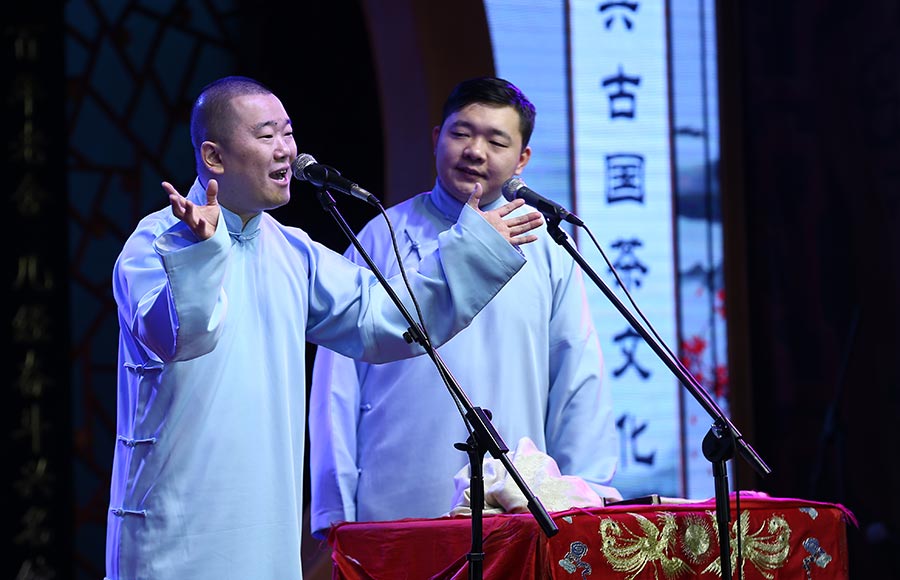
Chinese Crosstalk
Introduction
Xiangsheng, also known as crosstalk, is a traditional Chinese comedic performance art that typically involves dialogue between two performers. It is renowned for its humorous banter, clever puns and satirical takes on contemporary and historical issues. With roots tracing back over 150 years, xiangsheng has been a beloved form of entertainment in China, appealing to audiences of all ages.
Traditionally, xiangsheng involves two performers standing behind a wooden table, clad in long traditional robes known as chang pao. The classic structure includes shuo (talking), xue (imitating), dou (teasing) and chang (singing). Although the standard format features a duo, variations with solo performers or larger groups also exist. Performers engage in dialogues filled with puns, allusions and cultural references, often drawing on social and political themes.
Historical Background
Xiangsheng originated in Beijing and first gained popularity in the late Qing Dynasty (1644-1911). The art form was initially performed on the streets, with performers entertaining passersby with sharp wit, mimicry and humor. One of the earliest recorded performances took place in the Tianqiao area of Beijing in 1862.
Modern Evolution
In modern times, xiangsheng has evolved to incorporate contemporary themes and multimedia elements, while retaining its traditional core. It remains popular in theaters and teahouses, and has gained new life through television and online platforms. Notable troupes like Deyunshe, led by prominent performer Guo Degang, have played a significant role in revitalizing xiangsheng, drawing large audiences and integrating the art form into mainstream media.
Xiangsheng has not only remained relevant but has also become a cultural export, with international performances introducing global audiences to its charm. Cross-cultural exchanges have seen performers from diverse backgrounds integrating xiangsheng techniques into their acts, thereby enhancing its global appeal. The art form continues to influence and be influenced by contemporary comedic styles, enriching the dialogue between traditional and modern entertainment.
Challenges and Future Directions
Despite its enduring popularity, xiangsheng faces challenges such as maintaining relevance in an increasingly digital world and preserving the nuanced linguistic humor that defines it. Efforts to train new generations of performers and adapt to new media are crucial for its sustained vitality. Shows like "Deyun Douxiaoshe" and initiatives by xiangsheng masters aim to nurture young talent and explore innovative expressions of this traditional art form.








